When we look above the sky at night what we all see is the twinkling stars and the moon. But What exactly is the space?
From the perspective of an earthling, outer space is a zone that is about 100 kilometres above our planet, where there is no appreciable air to breathe or to scatter light. In space the blue color gives way to black because oxygen molecules are not in abundance to make the sky blue. Also space is a vacuum. Therefore sound waves cannot travel because molecules are not close enough to transmit sound between them. And that does not mean that space is empty, however gas, dust and other bits of matter float around empty areas of the universe, while more crowded regions can be like planets, stars and galaxies..
What is there in space?
Apart from our 8 planets and their belonging satellites and the sun, there are lots and lots of things that we still don’t know in space. For example, in space there are things like asteroids, meteoroids, comets, black holes and a lot of galaxies (just like our own milky way galaxy)in the whole space.
There are no physical boundaries in space. The solar system consists of 8 planets orbiting around 1 star- The Sun. Our solar system is about 4.6 billion years old. The planets, asteroids and comets in the Solar System are the loose objects left over from the formation of the sun.
THE PLANETS:
Our galaxy officially has 8 planets( i.e. Mercury, Venus, Earth, Mars, Jupiter, Saturn, Uranus, and Neptune) and one star – The Sun . Neptune – The farthest planet from the sun is Neptune and is measured approximately 30 astronomical units from the sun. An astronomical unit is a unit of length used by astronomers and 1 astronomical unit equals the distance from Earth to the sun.
COMET:

Comets are small, fragile, irregularly shapes bodies composed mostly of a mixture of water ice, dust and carbon and silicon based compounds. Comets have 3 distinct parts – a nucleus, a coma, and a tail. The solid core is called the nucleus. The coma is the dusty, fuzzy cloud around the nucleus if the comet and the tail extends from the comet and points away from the sun. The coma and tail if a comet appears only when the comet is near the sun. The two types of comet tail are – dust and gas ions.
Comets are found in two main regions in our solar system – The Kuiper belt and Oort cloud. There are two types of Comets – Short period and long period Comets.
Short period Comets – Comets that frequently return to the inner solar system, probably comes from the Kuiper belt beyond the orbit of Neptune .example : comet Halley.
Long period Comets – It takes thousands of years to complete their orbits, probably originates from the Oort cloud i.e. in the region of the solar system between Jupiter and Neptune. Example: comet Hale- Bopp.
METEOR:
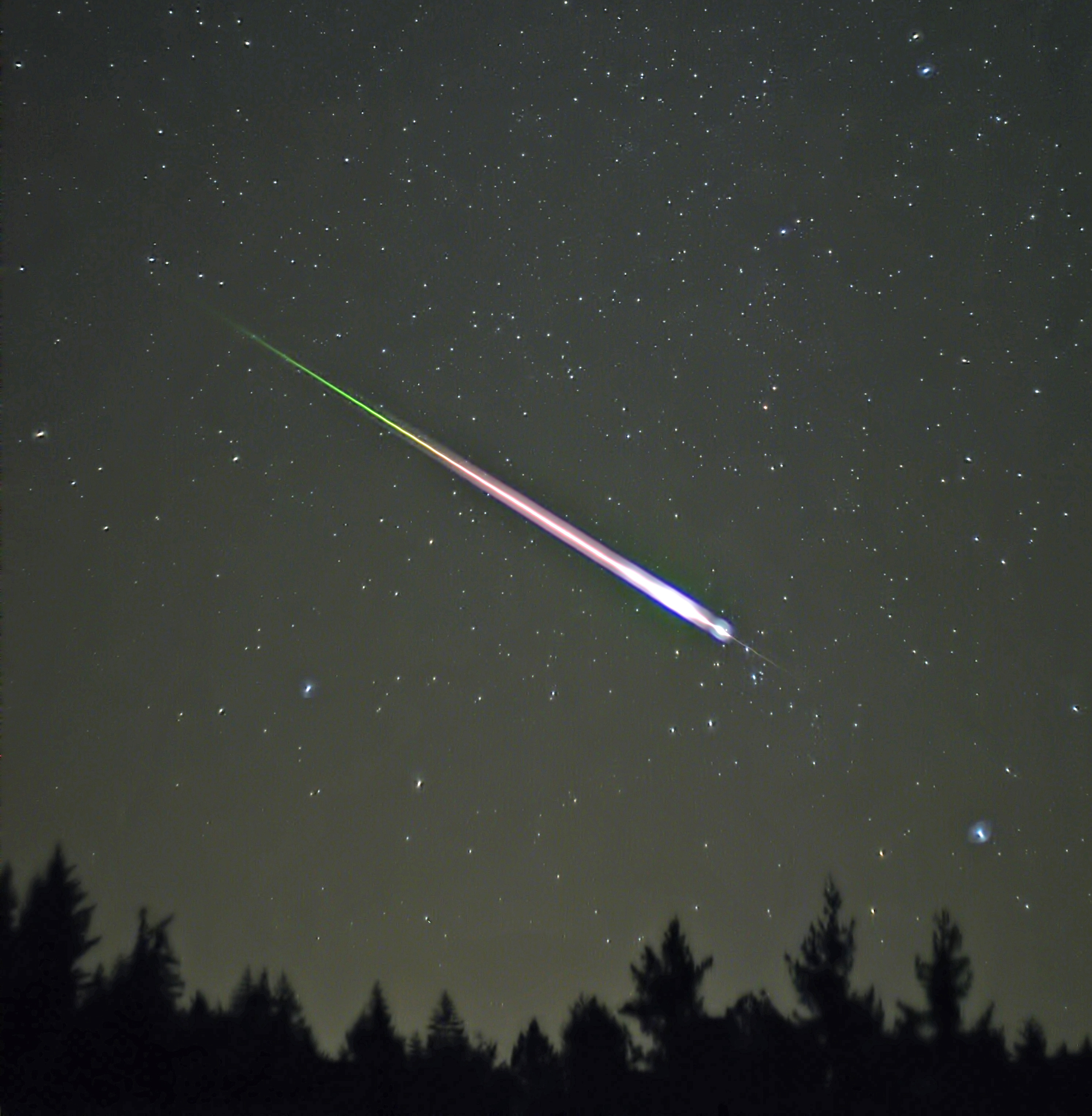
A meteor or a shooting star is a flash of light that we see in the night sky. When a small chunk of interplanetary debris burns up as it passes through our atmosphere.
METEOROID:
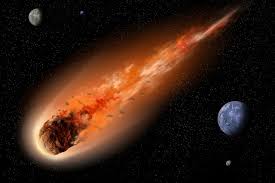
The debris itself is called the METEOROID. It is a piece of interplanetary matter. Most METEOROID that enters the Earth atmosphere are so small that they vaporize completely and never reach the earth’s surface.
METEORITE:

If any part of the METEOROID survives the fall through the atmosphere and lands on the Earth, it is called the meteorite.
ASTEROIDS:
They are generally larger chunks of rocks that came from the asteroid belt located between the orbit of Mars and Jupiter.. The first 3 asteroids are named after the goddess.
BLACK HOLE:
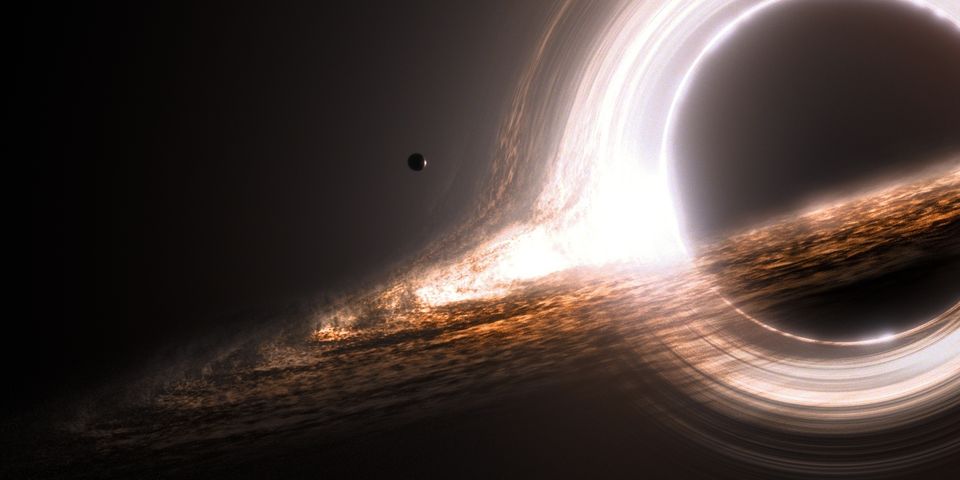
Black holes are formed when the centre of a very big star falls in upon itself or collapses. When it happens, it causes a supernova. Sometimes This supernova leads to the formation of a black hole.
Scientists think that the smallest black holes are as small as just one atom. There are 3 types of black holes – stellar, Super-massive and intermediate black holes. The mass of a stellar black hole is 20 times more than the mass of the sun. There may be many stellar black holes present in our own galaxy. The largest black holes are called “Super-massive” . Scientists have proof that every large galaxy contains a Supermassive black hole at its centre. The super massive black hole at the centre of the milky way galaxy is called Sagittarius A. It has mass equals about 4 million suns.
In conclusion, the space isn’t black at night. It is filled with so much light even the darkest of the skies. As I said earlier, we see it black only because of our eyes.

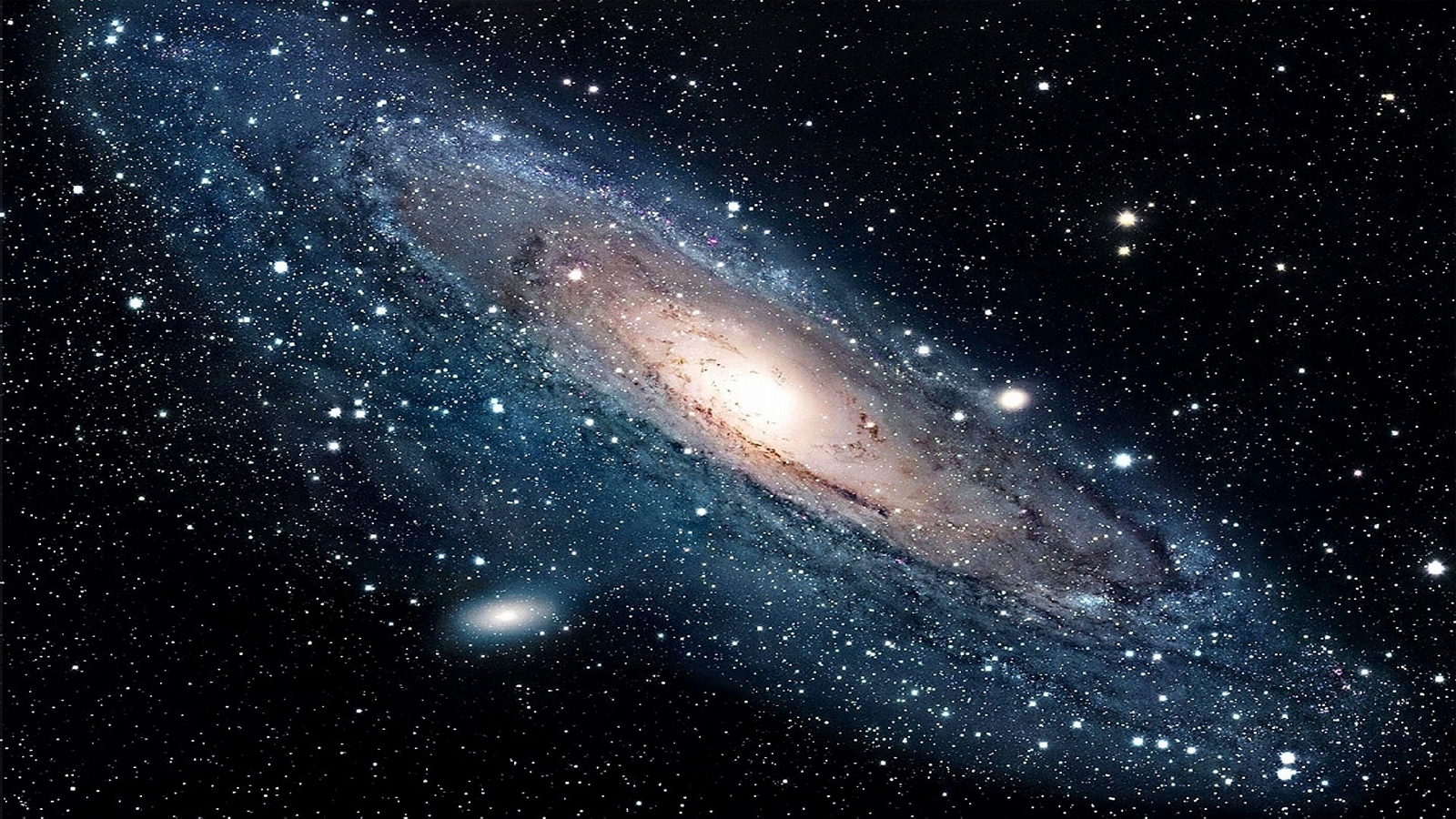
The above one is an image of the Hubble deep field by NASA. Each dot in this image is not a star, but an entire galaxy!! This is what the space is! Our space has a lot and lots of galaxies just like our own milky way galaxy. Scientist consider that ANDROMEDA galaxy is the closest spiral galaxy to our Milky way galaxy. The below one is the image of Andromeda galaxy.
 StarDustWaves
1 thought on “THE SPACE”