Right after the big bang, the dust and gas in the primary form of hydrogen and helium molecules formed the coldest and densest clouds in the interstellar medium. They were known as Molecular clouds because initially the hydrogen was in its molecular form (H2).
These clouds are so cold that their temperature is only 10 to 50 degrees Kelvin and its density is particles per cubic centimeter, masses ranging from a few to over a million solar masses. Its diameter varies from 20 to 200 parsecs. The bulk of the molecular cloud is contained in a ring between 3.5 and 7.5 kilo-parsecs from the center of the Milky Way.
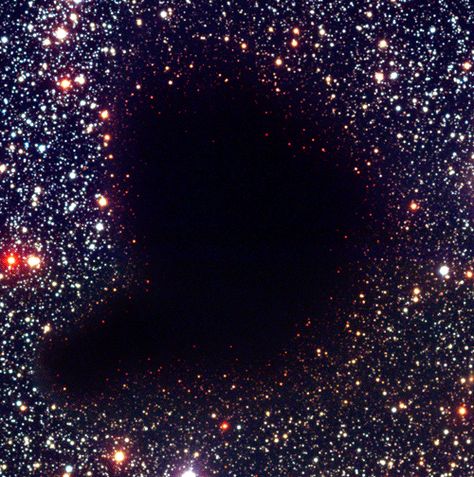
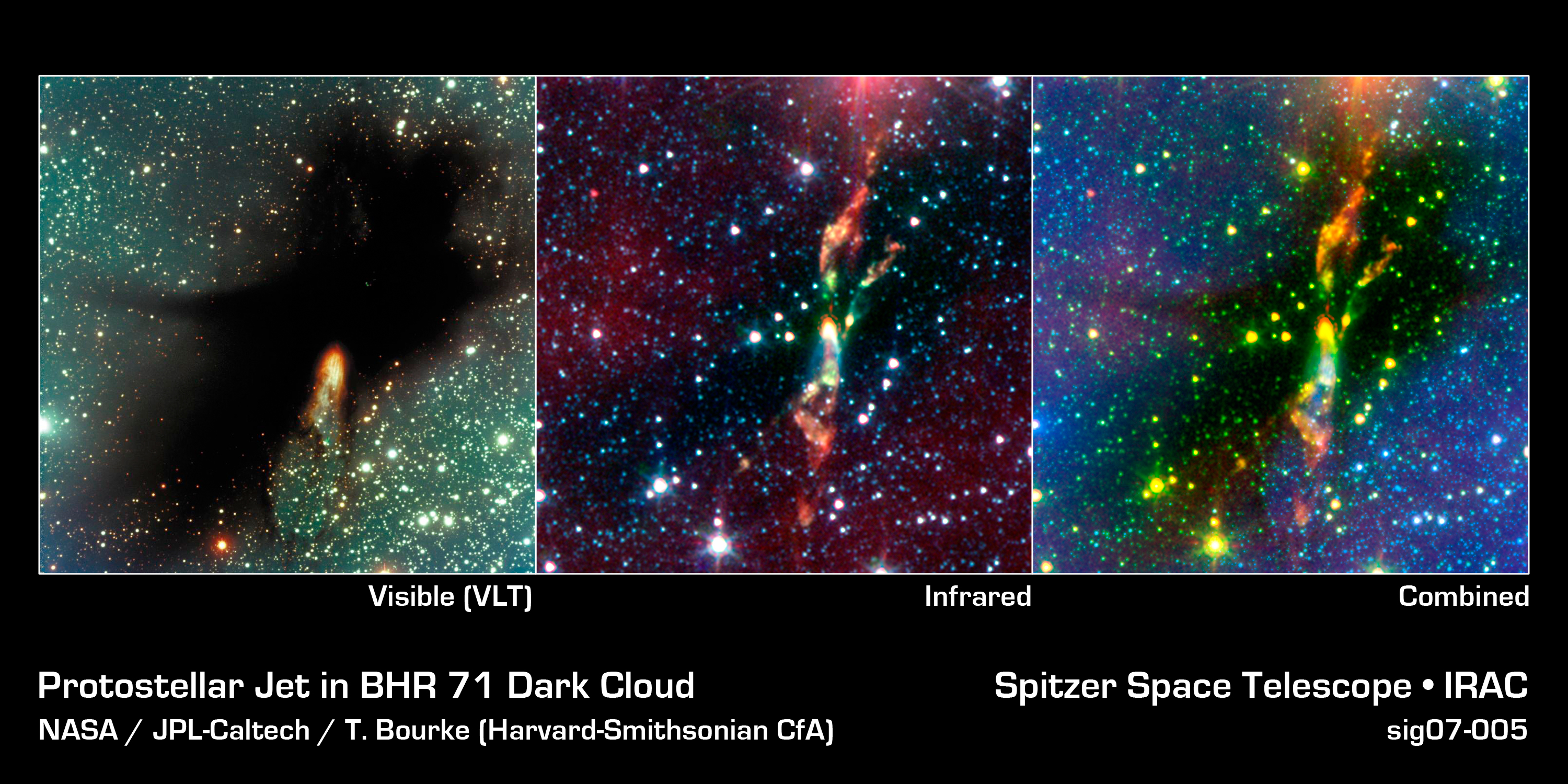
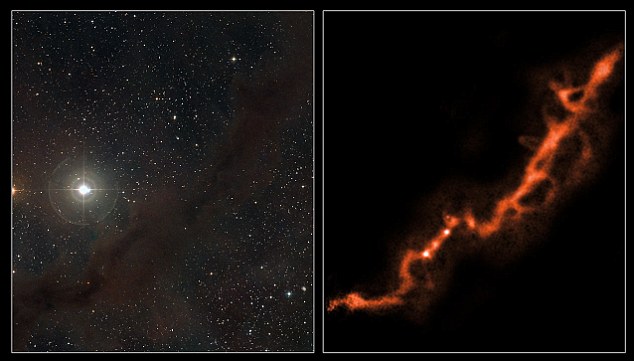
Are they visible? As they are cold and dark, it is impossible to observe them in visible light. The sources said some of the molecular clouds or nebulae can be observed by their bright stars present in them but, most of these clouds are undetectable because of the distant bright backgrounds.
Now, do the molecular clouds emit radiation? Yes, they do emit longer, millimeter wavelength radiation that interact all over the interstellar medium unaffected. Basically, the strength of the spectral lines from a molecule depends on its symmetric and asymmetric property. Since the hydrogen molecule is perfectly symmetric its spectral lines are extremely weak.
Do they exist in different types? Based on how dense the cloud is they are separated into two types (I.e.) Giant Molecular Clouds (GMC) and Small Molecular Clouds (SMC). The mass of GMC’s varies approximately 103 to 107 times the mass of the Sun. Its diameter is around 15 to 600 light-years (5 – 200 parsecs). The substructure of GMC’s is of irregular clumps and also filaments, sheets, bubbles like shape. The densest part of which is known as Dense Molecular Cores and has a density of 104 to 106 particles per cubic centimeter. Most of the molecular clouds form in the constellation belts therefore often referred to by that particular name of the constellation like Orion Molecular cloud, Taurus Molecular Cloud.
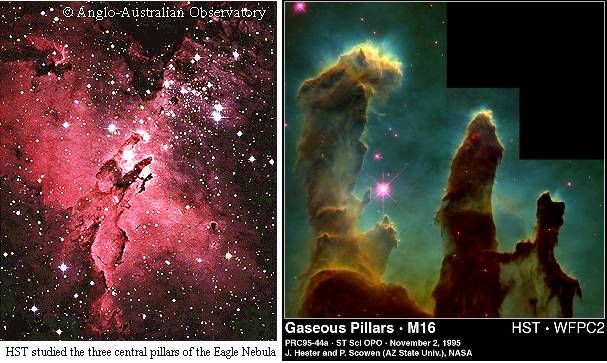
References
http://astronomy.swin.edu.au/cosmos/M/Molecular+Cloud
https://en.wikipedia.org/wiki/Molecular_cloud
http://coolcosmos.ipac.caltech.edu/cosmic_classroom/cosmic_reference/molecular_clouds.html
 StarDustWaves
3 thoughts on “The Molecular Clouds”