We all know that the Sun in our solar system has a giant ball of boiling gases with temperature almost 28 million degrees at the core. The atmosphere of the Sun is so hot that we couldn’t actually send any space-craft near to its surface and study it. But, have you ever imagined how its structure would be?
Now, what’s the real necessity to study about the Sun? Well, we have our very own main-sequence star in the solar system. Moreover, it currently is and will be the only natural heat source to Earth for another billion years. So, it is important to know how our star behaves and what are the possible effects caused on Earth, if something goes wrong in the Sun.
Now, what could be the possible effects reflected on Earth caused by the Sun? I mean, can it be dangerous? Oh, click here to see the effects and why it is important to study more about our star!
In short, we observe the space weather to take precautions. Our technology has well-developed, we have built our tele-com systems, human-made satellites are orbiting around the Earth and there are astronauts in the space stations. In order to prevent these severe damages, we should be aware of space weather.
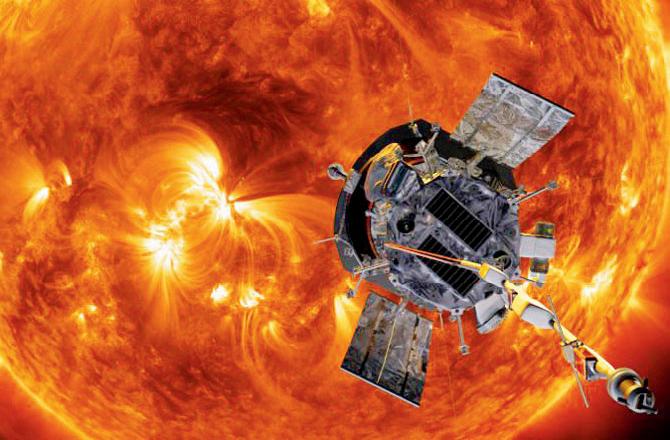
Apart from all the 24 ground-based telescopes around the Earth, our technology made a brilliant space-craft that could actually survive the temperature at the Sun’s Corona itself and study about its atmosphere. In August 2018, NASA’s space-craft named “Parker Solar Probe” was launched into space. So, Parker enhances the behavior of high energetic particles emitted from the Sun. Till now the space-craft has found 4 features about the Earth’s atmosphere.
Credit : NASA
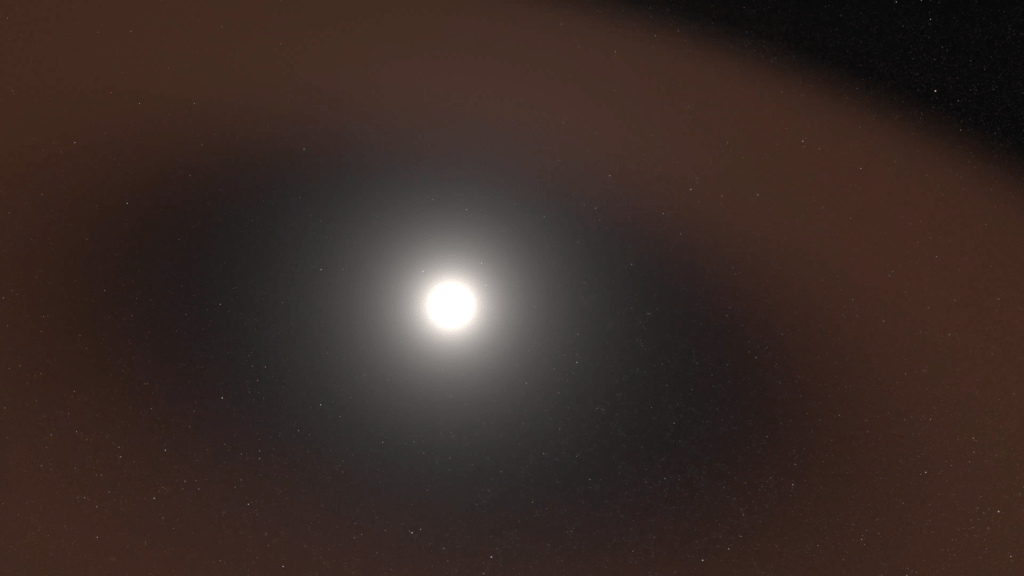
- We know that the space is filled with dust. But Parker has changed the view that as it moved towards the sun, we observed that the dust starts to vaporise 3.5 billion miles from the Sun. So, it is a dust-free zone near the Sun.
Credit : NASA
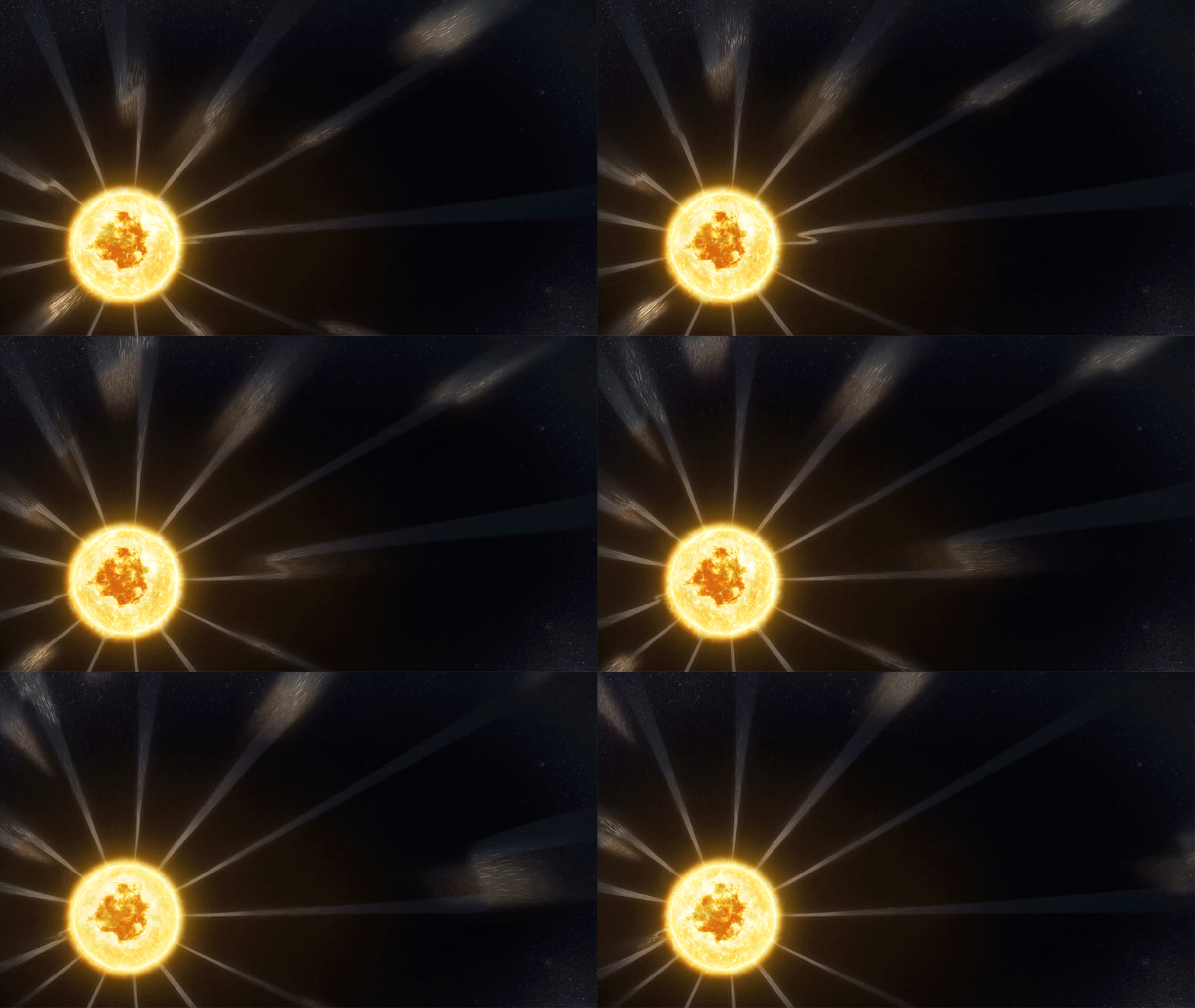
- Parker also encountered that the magnetic fields are switching back 180 degrees to the Sun in matter of seconds for some reason.
- The solar wind produced by the Sun gets decreased as it travels further. Seems to be that, these perks may also be the reason for the switching of magnetic fields. This study will let us know the early stages of solar wind ‘what it looks like?’ as soon as it got ejected from the Sun.
Credit : NASA
- Parker also found that the layer beyond corona is the transition point of solar wind.
- Although Earth gets affected by the higher intensity of solar wind or CME’s, the Sun also encounters small ejections. These events can be observed from the Earth. But it never reaches us and we couldn’t study about that either. Since the parker mission is successful, we can study about these small events occurring in the Sun whether they are regularly produced or in a cycle.
And now, the ground-based solar telescopes on Earth have similar jobs to observe the Sun but from Earth itself. The largest telescope ever built is Daniel K. Inouye Solar Telescope in Hawaiian Island of Maui which has a 400cm wide mirror. This telescope is capable of observing structures on the surface of the sun as small as 30 kilometers while identifying the atoms and molecules present and its resolution is 5 times better than NSF’s Dunn Solar Telescope. Well, with great power comes ‘high maintenance’. Since this telescope’s looking for higher resolution, the shape of the mirror adjusts 2000 times per second and it uses deformable mirrors to offset distortions caused by Earth’s atmosphere. Also, staring at the sun makes the telescope so hot that the DKIST team has to use a swimming pool of ice and 7.5 miles of pipe-distributed coolant to cool it down! But when compared with other telescopes, DKIST is flexible and upgradable.
This telescope is built to operate at least for 4 solar cycles (44 years). This is the beginning journey of DKIST and the very first image is stunning, though we have a long way to go.
These ground-based telescopes and the space-craft observe only the middle section of the Sun, orbiting with the other planets. So, this year ESA and NASA has launched a new space-craft that bound at the centre of the solar system, where it will get a view of the Sun that no space vehicle has seen before, its poles! The spacecraft Solar orbiter, programmed to fly a path around the sun at a high angle, so that we could observe its polar regions. Because, the reason behind every 11 years the Sun changes its north and south poles completely is still unknown.
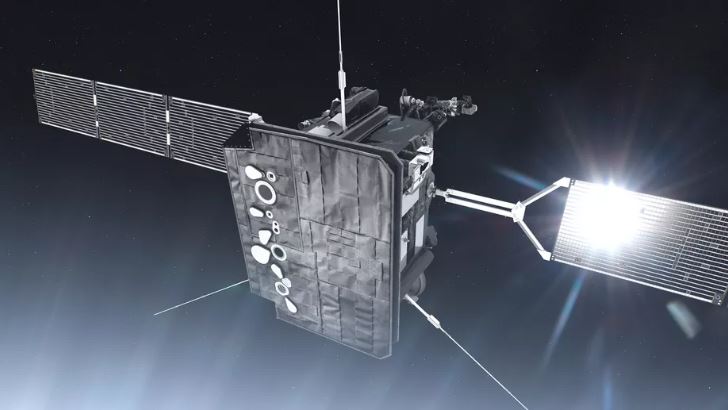
Credit : ESA
Hopefully, the mystery about the Sun’s strange 11-year cycle can be solved by these observations!
 StarDustWaves