You might have heard the saying in astronomy: “We are all made of stardust.” It’s a phrase so poetic, so profound, that it often feels like a line from a science fiction novel or a dreamy lyric from a cosmic ballad.
But what if I told you, it’s not just a metaphor?
In the late 1950s, a group of scientists uncovered the truth behind that beautiful idea. Among them was a woman who defied societal norms, challenged the scientific establishment, and quite literally helped us understand where we came from.
Her name was Margaret Burbidge, and she didn’t just study the stars, she helped explain how they made everything we know, from the oxygen we breathe to the iron in our blood. Through her groundbreaking work, she revealed that the universe is not a distant, separate entity. It is a part of us, and we are a part of it.
This is the story of a girl who looked up at the night sky and never stopped chasing its light. It’s a story of curiosity, struggle, brilliance, and one of the most important discoveries in astrophysics.
This is the story of Lady Stardust !
The Origins of Elements
By the 1950s, Margaret Burbidge had already navigated many closed doors. She had battled gender barriers, challenged institutions, and earned her place among the stars, quite literally. But it was during this time that she became part of something even greater: a discovery that would rewrite the story of the universe.
It all began with a question as old as humanity itself: Where do we come from? Not in the biological sense, but in the elemental one. What are we made of? Where did the carbon in our cells, the iron in our blood, the calcium in our bones originate?
Margaret was already fascinated by the light of stars: how each glimmer held clues to its composition. She could read a star’s light like a fingerprint, using spectroscopy to identify the elements hidden in its glow. But the more she observed, the deeper the mystery grew. If stars contained so many elements… how did they get there?
It was around this time that Margaret joined forces with her husband Geoffrey Burbidge, nuclear physicist William A. Fowler, and the brilliant theorist Fred Hoyle. The four of them, with different minds from different disciplines, had one common goal: to trace the birth of elements.
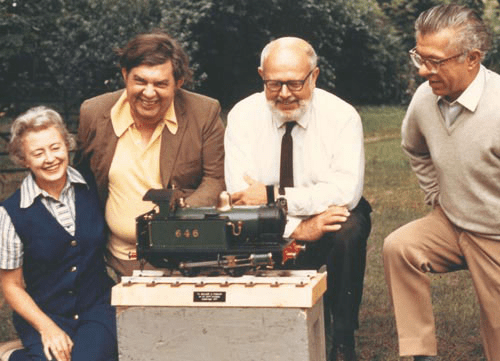
Credit: Sky & Telescope archive
In 1957, after years of relentless work, the group published a paper titled “Synthesis of the Elements in Stars.” But the world would come to know it by a much shorter name: the B2FH paper, after the initials of its authors: Burbidge, Burbidge, Fowler, and Hoyle.
The paper wasn’t just a scientific report. It was a cosmic saga.
It told the story of stars not just as glowing orbs in the sky, but as giant nuclear furnaces, forging the elements one by one. It explained how stars began their lives by fusing hydrogen into helium, and when the hydrogen ran out -> they began to fuse helium into carbon, carbon into oxygen, and so on, building heavier and heavier elements in their blazing cores.
And when the stars could no longer carry the weight of their own gravity, they exploded into supernovae, hurling these freshly forged elements into space. Gold, silver, uranium: a rare, precious elements that couldn’t form in the calm interiors of stars were born in these violent deaths.
The key processes in detail:
- Hydrogen Burning (Proton-Proton Chain and CNO Cycle): In the cores of main-sequence stars like the Sun, hydrogen nuclei (protons) fuse to form helium. This is the most basic and earliest process in a star’s life.
- Helium Burning: When a star exhausts its hydrogen fuel, it begins to fuse helium into heavier elements like carbon and oxygen.
- Carbon, Neon, Oxygen, and Silicon Burning: In massive stars, the core gets hot enough to ignite carbon, neon, oxygen, and finally silicon, producing elements like magnesium, sodium, sulfur, argon, and eventually iron.
- S-process (Slow Neutron Capture): This process occurs in aging stars, where neutrons are slowly captured by atomic nuclei. It builds up many of the heavier elements beyond iron, such as strontium, barium, and lead.
- R-process (Rapid Neutron Capture): In more extreme environments like supernova explosions or neutron star mergers, atomic nuclei rapidly capture neutrons, creating very heavy elements such as gold, uranium, and platinum.
- Explosive Nucleosynthesis: In supernovae, the violent explosion provides enough energy and free neutrons to create many rare elements very quickly. These explosions also scatter these elements into the surrounding space, enriching the interstellar medium with the raw material for new stars and planets.
Margaret’s fingerprints were all over this work. Her observations of starlight confirmed the presence of specific elements predicted by theory. She matched data with models, bringing the stars’ secret processes into the light of science. Without her, the elegant theory would have remained just that—a theory. She grounded it in the real universe.
The conclusion was breathtaking in its simplicity and scope: every atom heavier than helium had been created inside stars. Every tree, every mountain, every person… all built from stardust.
That poetic truth “we are made of star stuff” was no longer just speculation or philosophy. It had been calculated, observed, and published. Margaret Burbidge and her colleagues had given the universe a voice, and it spoke in elements.
The B2FH paper didn’t just change science. It changed perspective. It made people look at the stars differently. Not just as distant suns, but as ancestors, creators of the very matter that would someday look back up at them in wonder.
Lady Stardust – A Legacy Written in the Stars
With the publication of the B2FH paper, Margaret Burbidge etched her name not just into scientific journals, but into the very narrative of the cosmos. Her work helped us realize that we are not separate from the universe, we are of it. Every cell in our body, every breath we take, every heartbeat, echoes the life and death of stars that lived billions of years ago.
Margaret didn’t just look at the stars, she listened to them. And in their light, she uncovered a story older than Earth itself. A story that says we are made from cosmic dust, forged in the hearts of stars, scattered across space, and eventually gathered into planets, oceans, and people.
Though she faced discrimination, though her brilliance was often dimmed by the times she lived in, Margaret burned brighter. She shattered ceilings, illuminated truths, and left behind a glowing trail for others to follow.
To this day, when we say “we are made of stardust”, we’re not just reciting a poetic phrase, we’re echoing the life’s work of a woman who helped prove it.
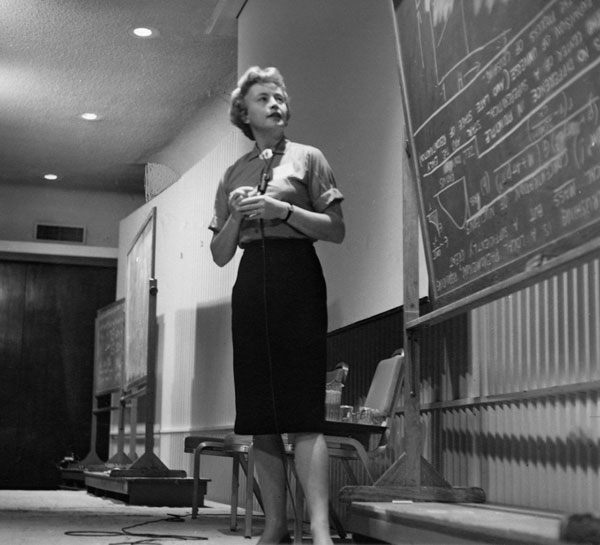
Margaret Burbidge passed away in 2020 at the age of 100, leaving behind a legacy that shaped the course of modern astrophysics. She helped open the doors of major observatories to women, advocated fiercely for equality in science, and provided one of the most profound insights into our cosmic origins.
Margaret Burbidge: Lady Stardust—reminds us that the universe is not just out there in the sky. It’s within us. And thanks to her, we know exactly how.
Link to the B2FH paper:
E. M. Burbidge; G. R. Burbidge; W. A. Fowler; F. Hoyle (1957). “Synthesis of the Elements in Stars” (PDF). Bibcode:1957RvMP…29..547B.
 StarDustWaves