
Throughout the year, societies around the world dedicate specific days to recognize the contributions of people who shape our lives and advance humanity. For example, International Doctors’ Day honors the dedication of physicians who safeguard public health, while World Teachers’ Day celebrates educators who guide generations of learners. In a similar spirit, International Women’s Day, observed every year on March 8, stands as a global tribute to the achievements, resilience, and progress of women across all fields. The roots of this day lie in a series of historic moments: the 1908 march of women garment workers in New York demanding better pay and working conditions, the 1910 proposal by German activist, Clara Zetkin at the International Socialist Women’s Conference to establish a day dedicated to women’s rights, and the powerful 1917 protests by Russian women calling for “bread and peace” during World War I. These movements eventually led the United Nations in 1975 to officially recognize March 8 as International Women’s Day.
In that spirit of honoring women who have transformed our world, this article is a small tribute to one remarkable scientist: Vera C. Rubin, the astronomer whose groundbreaking work revealed that most of the matter in our Universe is invisible, forever changing the way we understand galaxies and the cosmos.
Early Curiosity
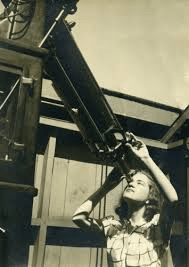
Vera C. Rubin was born as Vera Florence Cooper on 23 July 1928 in Philadelphia, into a family that quietly nurtured her growing curiosity about the world. Her father, Philip Cooper, was an electrical engineer who loved building things, while her mother, Rose Cooper, strongly encouraged Vera’s education and independence. When Vera was about ten years old, the family moved to Washington, D.C., and it was there that the night sky began to captivate her imagination. From the window of her bedroom, which faced north, she spent countless evenings watching the stars slowly sweep across the sky. She noticed that they seemed to circle around a fixed point: the Polaris, and this simple observation sparked a deep curiosity in her young mind. Determined to understand what she was seeing, Vera began sketching and mapping the motion of stars from her window night after night. Recognizing her fascination, her father helped her build a small telescope and even drove her to amateur astronomy meetings so she could learn more about the universe. By the time she reached her teenage years, Vera had already made up her mind about her future that she wanted to become an astronomer. Yet in the 1940s, the world of science, particularly fields like physics and astronomy, was still largely closed to women, meaning that the path she had chosen would require not only passion and curiosity but also extraordinary perseverance.
Struggles entering Astronomy
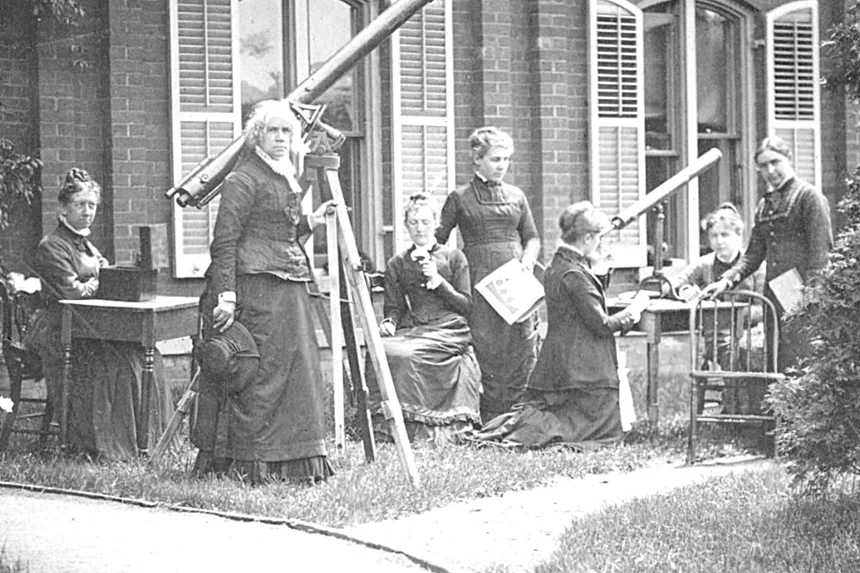
After finishing school and determined to pursue her dream of studying the Universe, Vera C. Rubin applied to the graduate astronomy program at Princeton University. However, the scientific world of the late 1940s still carried strong institutional barriers for women. At that time, Princeton simply did not admit women into its astronomy graduate program, a policy that would remain in place until 1975. Although this rejection could have discouraged many young scientists, Rubin refused to abandon her passion for astronomy. Instead, she enrolled at Vassar College, where she earned her Bachelor’s degree in Astronomy in 1948. Vassar had a remarkable legacy in astronomy and had long supported women scientists. There, Rubin found inspiration in the legacy of Maria Mitchell, the first professional female astronomer in the United States and the founder of the astronomy program at Vassar. Mitchell had discovered a comet in 1847 and became a symbol of women’s achievements in science. For Rubin, learning about Mitchell’s life and accomplishments was profoundly motivating; it showed her that women could indeed pursue astronomy and make meaningful contributions to the field. That realization strengthened Rubin’s determination to continue her journey toward becoming an astronomer, despite the obstacles placed before her.
Graduate Studies and Early Research
After completing her undergraduate studies, Vera C. Rubin continued her academic journey by pursuing graduate studies at Cornell University, where she earned her Master’s degree in 1951. At Cornell, Rubin had the opportunity to learn from some of the most brilliant scientific minds of the twentieth century, including Richard Feynman, Hans Bethe, and Philip Morrison, all of whom were shaping modern physics during that era. Immersed in this stimulating intellectual environment, Rubin began developing her own ideas about the structure of the Universe. For her master’s thesis, she proposed that galaxies might not be scattered randomly throughout space but instead could be grouped together in larger cosmic structures. At the time, this idea challenged the prevailing assumptions in astronomy and was met with skepticism by some scientists, yet decades later it would become a fundamental concept in what we now call the large-scale structure of the Universe. Determined to continue exploring the dynamics of galaxies, Rubin pursued her doctoral studies at Georgetown University, where she completed her PhD in 1954 under the supervision of the renowned physicist George Gamow. During her doctoral research she studied the motions and distribution of galaxies, investigating how galaxies move relative to one another across cosmic space. This work further strengthened her growing interest in the large-scale behavior of galaxies—an interest that would later guide her toward the groundbreaking discoveries that transformed our understanding of the Universe.
The discovery that changed Cosmology
During the 1960s and 1970s, Vera C. Rubin began the work that would ultimately transform modern astronomy while she was conducting research at the Carnegie Institution of Washington. There she collaborated with the talented instrument specialist Kent Ford, who had developed an exceptionally sensitive spectrograph capable of measuring the motion of stars in distant galaxies with remarkable precision. Using this instrument, Rubin carefully observed the rotation of spiral galaxies, measuring how fast stars moved as they orbited around the galactic center. According to the laws of gravity described by Isaac Newton, stars that are farther from the center of a galaxy should move more slowly, much like the outer planets of our Solar System orbit the Sun at lower speeds than the inner planets. Astronomers therefore expected that the rotation speed of stars would decrease with distance from the galactic center.
However, Rubin’s observations revealed something astonishing. When she studied galaxies such as the Andromeda Galaxy (M31), she discovered that stars located far from the center were moving just as fast as those much closer in. Instead of decreasing, the rotation speeds remained nearly constant, producing what astronomers call flat rotation curves. This unexpected result suggested that galaxies must contain far more mass than what could be seen through telescopes. The visible stars, gas, and dust simply could not provide enough gravitational pull to keep the fast-moving outer stars bound to the galaxy.
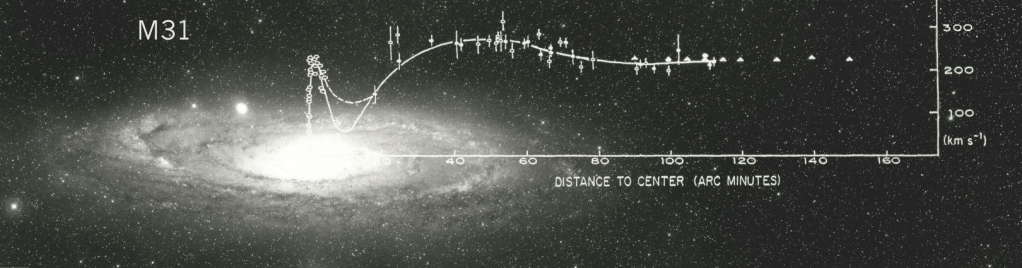
Rubin realized that galaxies must therefore be surrounded by a vast amount of invisible matter, now known as dark matter. Her careful observations provided the strongest evidence that most of the matter in the Universe is invisible and today we estimate that ~85% of matter in the universe is dark matter, a discovery that reshaped our understanding of galaxies and laid one of the fundamental pillars of modern cosmology.
Scientific Achievements, Recognition and Awards
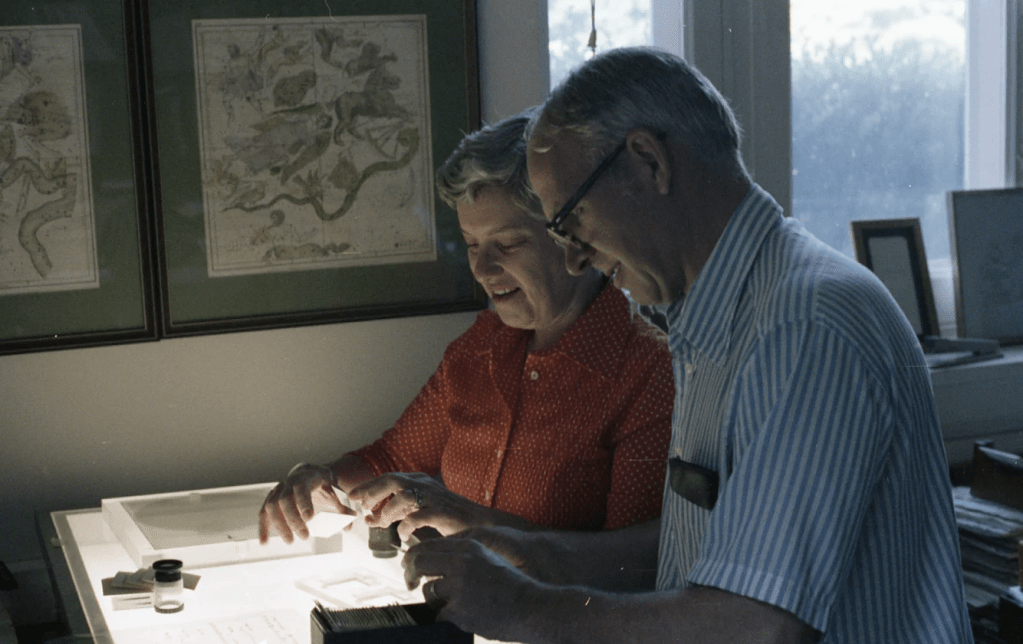
Over the course of her career, Vera C. Rubin made several groundbreaking contributions that reshaped our understanding of the Universe. Her most famous work provided the strongest observational evidence for dark matter, achieved through careful measurements of the rotation curves of hundreds of spiral galaxies. By studying how stars move within galaxies, Rubin demonstrated that the visible matter alone could not account for the observed motions, revealing that a vast amount of unseen mass must exist. Beyond this revolutionary discovery, she also made important contributions to galaxy kinematics, investigating how galaxies move within clusters and interact with one another. Earlier in her career, Rubin had already begun exploring the large-scale structure of the Universe, proposing that galaxies are not randomly scattered but instead grouped together in larger cosmic patterns. To carry out these studies, she relied on precision spectroscopy, using advanced spectrographs to measure tiny shifts in the wavelengths of light caused by the Doppler effect, allowing astronomers to determine the velocities of distant galaxies with remarkable accuracy.
Rubin’s extraordinary scientific achievements eventually earned her widespread recognition within the astronomical community. Among her many honors were the prestigious National Medal of Science, awarded in 1993, and the Gold Medal of the Royal Astronomical Society in 1996, one of the highest distinctions in astronomy. She was also elected to the National Academy of Sciences, reflecting the profound impact of her work on modern astrophysics. Yet despite the revolutionary nature of her discoveries and their lasting influence on cosmology, Rubin never received the Nobel Prize, something that many astronomers have long regarded as a significant oversight. Nevertheless, her legacy remains immense, as her observations fundamentally changed our understanding of the composition of the Universe and opened the door to decades of research on dark matter.
Advocacy for Women in Science
Rubin actively worked to break gender barriers in astronomy.
- She pushed observatories to allow women observers.
- She supported young female scientists entering astronomy.
At one point she famously wrote:
“There is no problem in science that can be solved by a man that cannot be solved by a woman.”
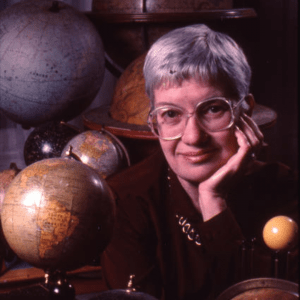
When she began observing, some observatories had no women’s restroom because they had never expected female astronomers. Rubin insisted on equal access.
Legacy
The scientific legacy of Vera C. Rubin extends far beyond the discovery that made her famous. By demonstrating that galaxies are dominated by unseen mass, Rubin fundamentally reshaped several areas of astrophysics, including cosmology, galaxy dynamics, and dark matter research. Her work forced astronomers to rethink how galaxies form and evolve and revealed that the visible Universe: stars, gas, and dust is only a small fraction of the total cosmic matter. Generations of astronomers have since built upon her observations, developing sophisticated models and experiments to understand the mysterious substance we now call dark matter. In recognition of the profound impact of her contributions, one of the most ambitious astronomical facilities ever constructed was named in her honor: the Vera C. Rubin Observatory, located on Cerro Pachón.
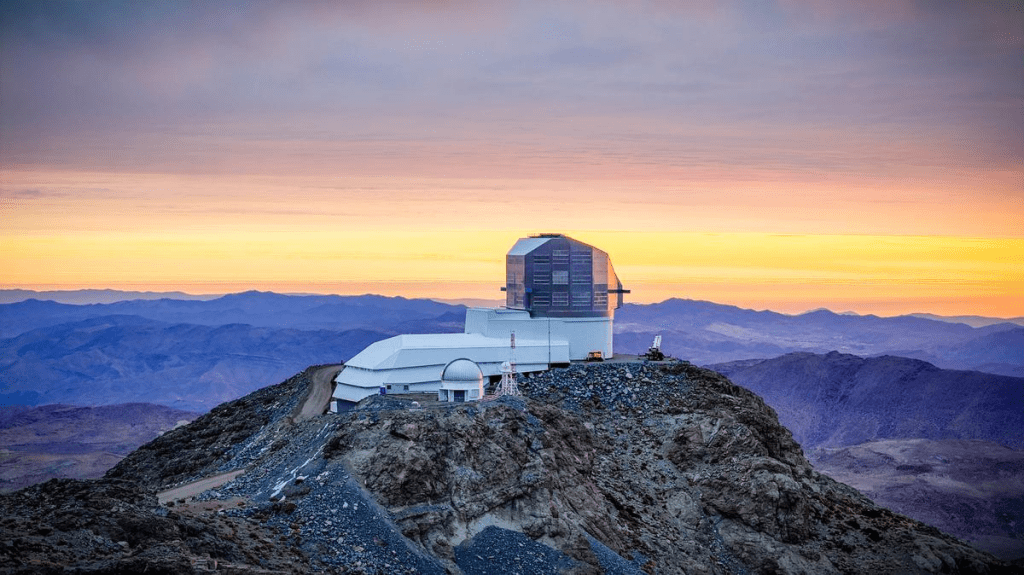
At the heart of this observatory is a revolutionary project known as the Legacy Survey of Space and Time (LSST). Using an 8.4-meter telescope equipped with the largest digital camera ever built for astronomy—containing 3.2 billion pixels the observatory will repeatedly scan the entire southern sky every few nights for a period of ten years. This enormous survey will produce an unprecedented time-lapse map of the Universe, capturing the motions and changes of billions of celestial objects. Astronomers expect LSST to detect billions of galaxies, discover millions of new asteroids and comets, observe supernova explosions, and track variable stars and transient events across the sky. Most importantly, by mapping the distribution and gravitational effects of galaxies on cosmic scales, the survey will provide powerful new clues about the nature of dark matter and dark energy, two of the greatest mysteries in modern cosmology. In many ways, the mission of the Rubin Observatory continues the scientific journey that Vera Rubin began decades ago: using careful observations of galaxies to uncover the hidden structure of the Universe.
Throughout the history of astronomy, several remarkable women made fundamental discoveries but their work was overlooked, delayed in recognition, or credited to male colleagues. Here are a few examples:
Henrietta Swan Leavitt
Henrietta Leavitt worked at the Harvard College Observatory in the early 1900s as part of a group known as the “Harvard Computers.” These women were hired to analyze photographic plates of stars but were rarely credited as scientists.
Her discovery:
Leavitt discovered the period–luminosity relationship of Cepheid variable stars, now called Leavitt’s Law.This relationship allowed astronomers to measure distances to faraway galaxies.
Why it was revolutionary?
Her work enabled Edwin Hubble to prove that galaxies exist outside the Milky Way, leading to the discovery that the Universe is far larger than previously believed.
Yet during her lifetime, Leavitt received very little recognition.
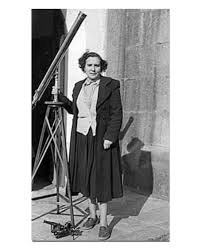
Cecilia Payne-Gaposchkin
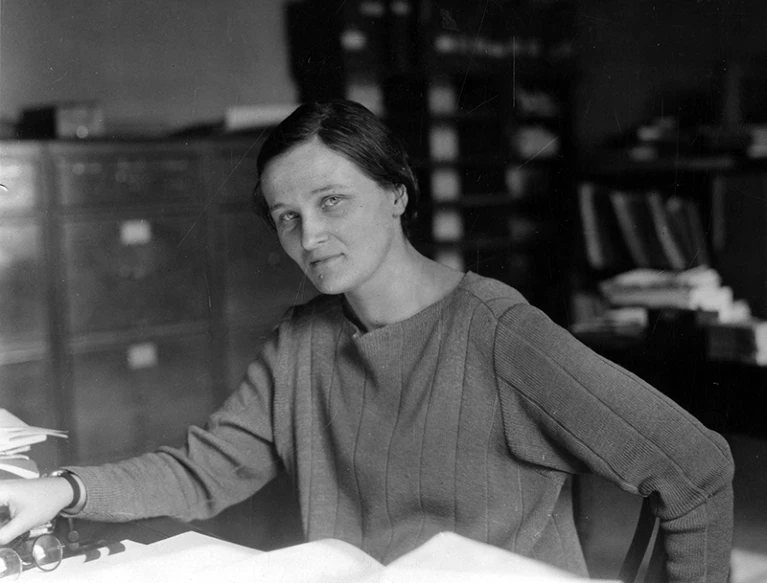
In 1925, Cecilia Payne completed one of the most important PhD theses in astrophysics at Harvard University.
Her discovery:
She demonstrated that stars are composed mainly of hydrogen and helium, contradicting the long-held belief that stars had compositions similar to Earth.
Initially, senior astronomers urged her not to emphasize this conclusion, claiming it must be wrong. Years later, observations proved she was completely correct.
Today this is considered one of the most important discoveries in astrophysics.
Annie Jump Cannon
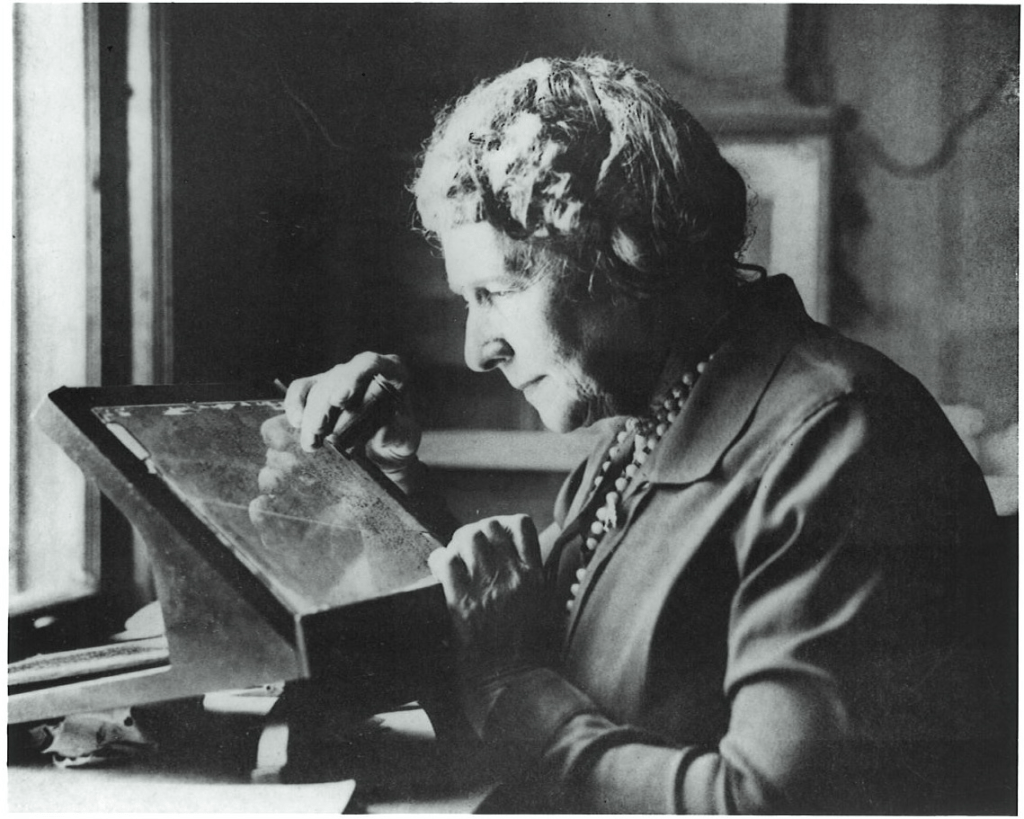
Annie Jump Cannon also worked at Harvard College Observatory.
Her contribution:
She developed the modern stellar classification system:This system categorizes stars by temperature and spectral features and is still used today.
Cannon personally classified more than 350,000 stars, yet for many years the work of the Harvard women astronomers was undervalued.
Jocelyn Bell Burnell
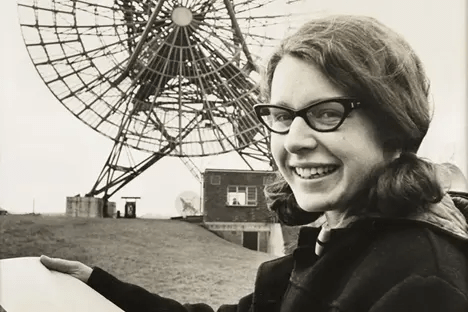
In 1967, while still a PhD student at University of Cambridge, Jocelyn Bell Burnell discovered the first pulsar, a rapidly rotating neutron star.
However, when the discovery received the Nobel Prize in Physics in 1974, the prize went to her supervisor and another scientist—not to Bell Burnell, even though she made the original observation.
Her discovery opened an entirely new field of astrophysics.
Caroline Herschel
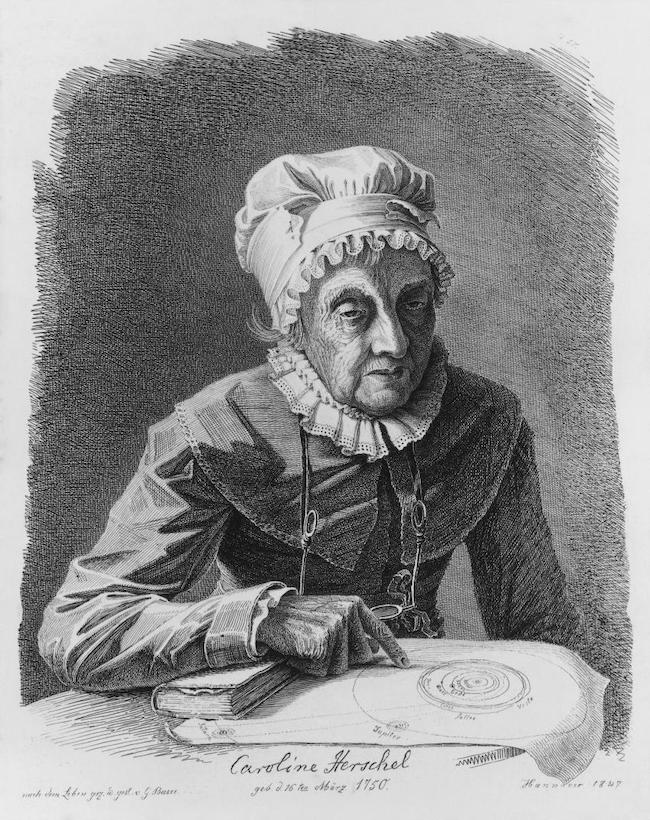
Caroline Herschel worked alongside her brother William Herschel, famous for discovering Uranus.
Although initially assisting her brother, Caroline became a brilliant astronomer herself.
Achievements
– Discovered 8 comets
– Compiled detailed star catalogs
– Became the first woman paid as a professional astronomer
Yet her contributions were long overshadowed by her brother’s fame.
Today, as we celebrate International Women’s Day, remembering these scientists is more than a tribute; it is a recognition that curiosity, determination, and discovery know no gender. By telling their stories, we not only honor their legacy but also inspire the next generation of scientists who will continue exploring the mysteries of the cosmos.
Citations:
- Rubin, V. C., Ford, W. K., & Thonnard, N. 1978, “Extended rotation curves of high-luminosity spiral galaxies. IV. Systematic dynamical properties, Sa–Sc galaxies” The Astrophysical Journal, 225, L107
- Rubin, V. C. 1954 “Rotation of the Andromeda Nebula from a Spectroscopic Survey of Emission Regions”
- Payne, C. H. (1925) “Stellar Atmospheres: A Contribution to the Observational Study of High Temperature in the Reversing Layers of Stars” Harvard College Observatory Monographs, No. 1
- Cannon, A. J., & Pickering, E. C. 1918–1924 “The Henry Draper Catalogue” Harvard College Observatory Annals, Volumes 91–99
- Hewish, A., Bell, S. J., Pilkington, J. D. H., Scott, P. F., & Collins, R. A. (1968) “Observation of a Rapidly Pulsating Radio Source” Nature, 217, 709–713.
- Herschel, W. (1781) “Account of a Comet” Published in the Philosophical Transactions of the Royal Society, 71, 492–501.
 StarDustWaves